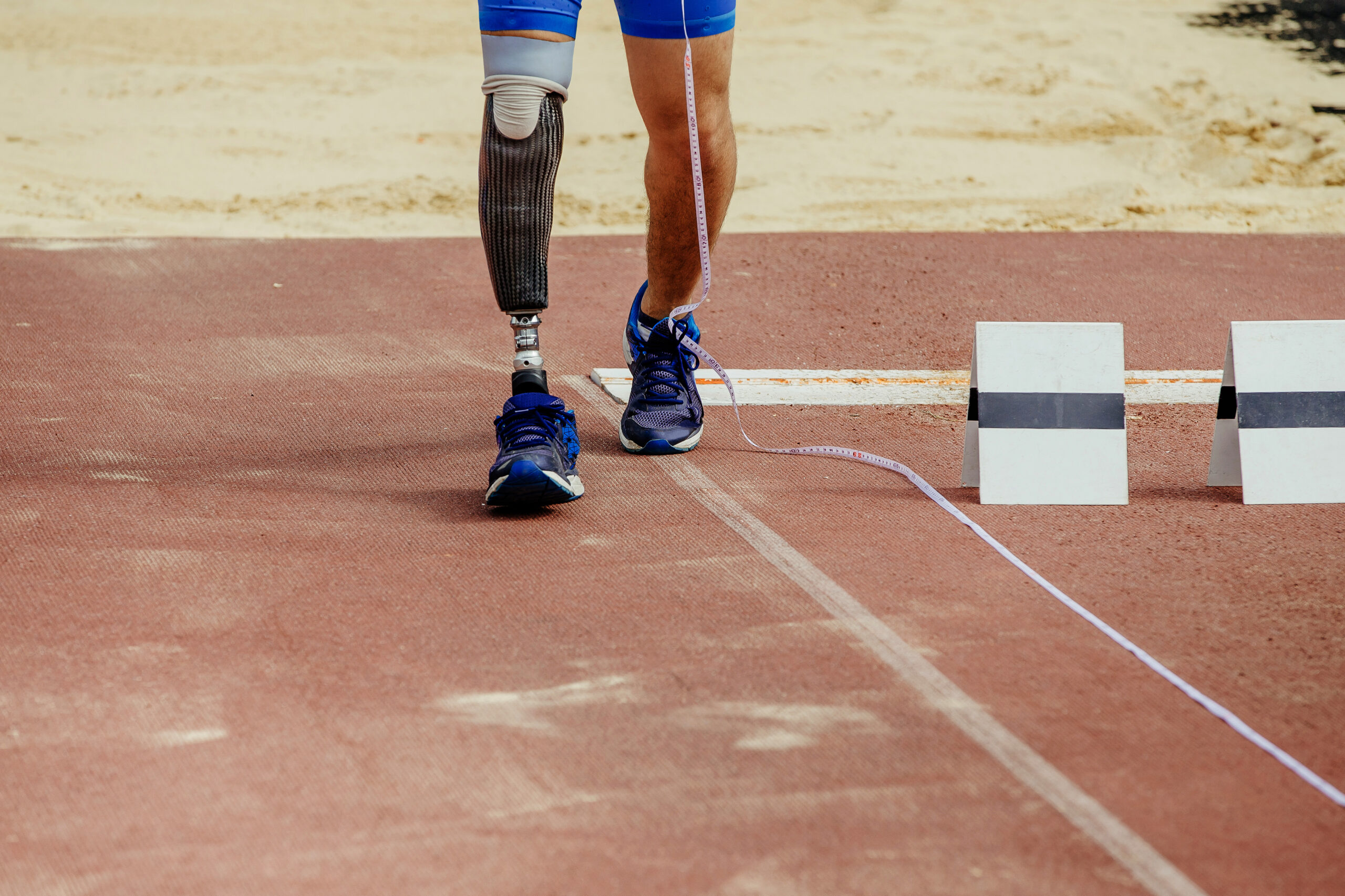
Future Trends in Sports Prosthetics & Performance

Key Highlights
- Next‑generation sports prosthetics increasingly combine smart materials, sensors, and AI for adaptive, performance‑enhancing capabilities.
- Modular and 3D‑printed prosthetic designs promise sport‑specific customization and faster, affordable fittings for athletes.
- Powered prosthetics with microprocessor-controlled joints and active feedback (e.g., haptic or sensory) are making prosthetics more natural, responsive, and capable.
- Neural interfaces and bio‑integrated prosthetics aim toward intuitive control — potentially by muscle or nerve signals — improving speed, control, and “embodiment.”
- Growing accessibility, affordability, and customization may broaden elite-level and recreational sports participation for amputees.
The Growing Role of Sports Prosthetics: From Assistive Device to Performance Gear
In the early days, prosthetic limbs were primarily about enabling basic mobility — walking, standing, and simple daily tasks. For athletes, that meant specialized blades or limbs adapted to running or jumping. Over time, though, prosthetics have evolved from purely functional replacements into sophisticated performance gear.
Today, with advances in materials science, machine learning, biomechanics, and manufacturing, sports prosthetics are entering a new era — one where prostheses adapt dynamically to activity, respond with feedback, and even learn to mirror natural limbs. These developments are transforming what it means to be an athlete with a prosthetic — shifting from “surviving with a prosthetic” to “competing at high performance with a prosthetic.”
Research shows that innovations like carbon-fiber running blades, bionic limbs, and smart prosthetic systems have significantly enhanced performance for amputee athletes.
In the sections below, we explore the most promising trends shaping the future of sports prosthetics — and what they might mean for athletes, casual users, and the prosthetic industry.
Key Trends Shaping the Future of Sports Prosthetics
Advanced Materials & Construction: Light, Strong, Custom
One of the foundation stones of high-performance prosthetics has been material innovation. Traditional prosthetics made from wood or heavy metals limited agility and caused fatigue. Modern advances have changed that dramatically:
- Materials like carbon fiber, thermoplastics, titanium, and advanced composites offer high strength-to-weight ratios — ideal for speed, agility, and endurance.
- Customization has improved: thanks to 3D‑printing and modular component design, prosthetics can now be tailored to an individual’s anatomy, sport, and activity level — from running blades to cycling-specific limbs to water-resistant prosthetics for swimming.
- This customization makes prosthetics more accessible and affordable, especially for younger athletes who need frequent adjustments as they grow or shift activity types.
Why it matters for sports: Lighter, stronger, and more personalized prosthetics reduce fatigue, improve performance, and let athletes push limits — from sprinting and jumping to long-distance running or multi-sport activities.
Smart & Powered Prosthetics: Intelligence, Adaptivity, Feedback
Prosthetics are no longer just passive devices. A major shift now underway is the integration of smart technology: sensors, microprocessors, actuators, and adaptive control systems that respond in real time to user movement, terrain, and activity type.
Key aspects of this trend include:
- Microprocessor‑Controlled Joints: Advanced prosthetic knees and ankles can now detect gait patterns, speed, and terrain changes, adjusting resistance and motion dynamically for a smoother, more natural gait.
- Powered Prosthetics with Actuators: Instead of relying solely on mechanical energy from the user, powered limbs can assist movement — reducing effort, improving endurance, and supporting high-intensity actions like sprinting, jumping, or rapid directional changes.
- Sensory Feedback & Haptics: Research is actively focusing on embedding sensors and vibro‑tactile feedback systems into prosthetic sockets and limbs to provide tactile, proprioceptive, and contact feedback, enabling users to “feel” what they touch, sense terrain and ground reaction, and adjust accordingly.
- Smart Connectivity & Adaptive Learning: With IoT integration, cloud‑enabled analytics, and AI-driven software, prosthetic performance can be monitored, adjusted, and optimized over time. Prosthetics may adapt to an athlete’s movement patterns, goals, or specific sport needs — and even receive upgrades via software or firmware updates rather than physical replacement.
Why it matters for sports: Smart and powered prosthetics help bridge the performance gap — offering agility, endurance, and responsiveness that rival biological limbs. Athletes can train more effectively, adjust to different sports, surfaces, or terrains, and achieve smoother, more natural movement.
Neural Interfaces, Bio‑Integration & Intuitive Control
Perhaps the most transformative future development is the integration of prosthetics with the human nervous system — blurring the line between artificial limb and natural extension of the body. Several lines of research point toward a future where prosthetics are directly controlled by neural or muscular signals, offering intuitive, natural control and potentially sensory feedback.
Some of the developments include:
- Brain‑ or Muscle‑Controlled Prosthetics: Prosthetic limbs that respond to brain or nerve signals allow for movement that more closely mirrors natural function — potentially improving reaction time, fluidity, and control.
- Bio‑Integrated Designs: Prosthetics that interface more naturally with the wearer’s biology — through embedded electrodes, osseointegration (anchoring to bone), or advanced socket materials — may reduce discomfort, improve stability, and offer a greater sense of “embodiment.”
- Sensory & Haptic Feedback: Research such as vibro‑inertial feedback systems shows potential for users to regain aspects of touch, pressure, or texture perception — boosting spatial awareness, balance, and proprioception, crucial for elite-level sports performance.
Why it matters for sports: With intuitive neural control and sensory feedback, prosthetic limbs could respond as naturally and dynamically as biological limbs — enabling precise control, better balance, faster reaction times, and a more natural athletic experience. This could drastically reduce the performance gap between able-bodied and adaptive athletes.
Multi‑Sport & Adaptive Prosthetics: Flexibility for Athletes & Everyday Use
In the past, an athlete might have needed separate prosthetics for running, cycling, swimming, etc. That’s changing. Emerging designs now focus on modularity and adaptability — prosthetics that can be adjusted or reconfigured for different sports or daily activities:
Examples of this trend include:
- Interchangeable Components: Running blades, flat-foot attachments, pedal-compatible feet, and swimming-friendly modules — all within the same modular prosthetic system.
- Adjustable Sockets & 3D‑Printed Parts: As athletes grow or change activity type, 3D printing enables quick, affordable adjustments — ideal for young athletes or those transitioning between sports.
- Hybrid “Daily + Sport” Prosthetics: For many active users, it’s not just about competition. Prosthetics that work for both daily living and sports help reduce the need for multiple limbs — making life simpler while supporting athletic pursuits.
Why it matters for sports & lifestyle: Flexibility, convenience, and cost-effectiveness. Instead of juggling multiple prosthetics, athletes and active individuals can have adaptable limbs that suit their lifestyle — whether that’s training, competing, or everyday mobility.
What This Means for the Future of Adaptive Sports
The convergence of these trends — smart materials, powered limbs, neural control, modularity, and customization — is reshaping what adaptive sports can look like. Here’s what to expect in the coming years:
- Higher Performance, Closer to Natural Limbs: Athletes will achieve more fluid motion, better balance, faster reaction times, and potentially even outperform current limitations.
- Greater Inclusion & Accessibility: As 3D printing and modular designs become more affordable, adaptive sports become accessible to a broader range of people — not just elite athletes.
- Blurring the Line: Prosthetics as Enhancements, Not Just Replacements: With AI‑driven adaptivity and bio‑integration, prosthetic limbs could become performance tools rather than mere substitutes — enhancing strength, agility, or endurance in ways not possible with biological limbs.
- More Sports Diversity: With modular, multi-sport prosthetics, individuals may more easily participate in multiple athletic disciplines — from running and cycling, to swimming, weightlifting, or team sports.
- Evolving Rehabilitation & Training Paradigms: Adaptive training programs — possibly using virtual reality, motion sensors, and real‑time analytics — will help amputee athletes learn to leverage advanced prosthetics more effectively.
In short, the future of sports prosthetics looks like an exciting convergence of biology, technology, and human potential — where prosthetic limbs are not a limitation, but a launching pad for performance, expression, and athletic aspiration.
Forecast Table: Current vs. Emerging Prosthetic Capabilities
| Capability / Feature | Current Common Standard | Emerging / Future – 2025 to 2030+ |
|---|---|---|
| Materials & Weight | Carbon-fiber blades; passive mechanical limbs | Ultra‑light advanced composites; bio‑mimetic, skin‑like covers; 3D‑printed customized limbs |
| Movement & Control | Passive movement; user-driven joint motion | Microprocessor‑controlled joints; powered actuators; adaptive resistance; terrain‑aware gait adjustment |
| Sensory Feedback | Minimal or none — mostly proprioception from residual limb | Embedded sensors, haptic/vibro feedback for touch, pressure, texture, surface detection |
| Sport‑Specific Adaptability | Often single-purpose (e.g., running blade) | Modular, multi-sport prosthetics with interchangeable attachments (running, cycling, swimming, everyday) |
| Cost & Accessibility | High cost, limited customization, longer manufacturing times | 3D printing, modular parts reduce cost and turnaround; better access globally |
| Control Interface | Manual/mechanical control; muscle-sensing (EMG) in some advanced models | Neural interfaces, AI-driven adaptive control, and machine learning to predict movement and optimize performance |
Challenges & Considerations
While the future of sports prosthetics looks promising, there remain important challenges — both technical and practical — that the industry must address:
- Complexity & Cost of High-Tech Prosthetics: Powered prosthetics with sensors, actuators, and neural interfaces can be expensive, and not all users or regions will have access right away.
- Durability and Maintenance: High-performance prosthetics must withstand intense physical stress — running, jumping, abrupt motions. Wear and tear, maintenance, and repair access remain concerns.
- Training & Rehabilitation Needs: Advanced prosthetics may require specialized training, physical therapy, or adjustments. Athletes need support to adapt their gait, balance, and muscle coordination.
- Regulations & Classification in Sports: As prosthetics approach or surpass natural-limb performance, sports governing bodies must adapt to evolving fairness, classification, and eligibility rules.
- Ethical and Psychological Questions: As prosthetics blur the line between replacement and enhancement, questions arise about performance advantage, equity, and identity — especially for competitive sports.
Despite these challenges, the trajectory of innovation suggests that solutions will emerge — especially as research, manufacturing, and global access continue to improve.
What Athletes, Users & Practitioners Should Watch
If you’re an athlete with a prosthetic — or a practitioner (trainer, prosthetist, coach) working with one — here are some practical recommendations to stay ahead and make the most of emerging trends:
- Stay informed about new prosthetic technologies: Sensor‑integrated, powered, or adaptive prosthetics may become available soon — keep in close contact with prosthetic providers and follow research updates.
- Consider modular or multi‑sport prosthetics if you engage in multiple athletic disciplines. Investing in a versatile prosthetic system may offer more value than multiple specialized limbs.
- Work with a multidisciplinary team: As prosthetics become more complex, collaboration among prosthetists, physical therapists, sports scientists, and possibly neural-interface specialists becomes essential.
- Prioritize comfort, fit, and durability — not just performance. High performance is valuable, but long-term comfort, skin health, and limb volume changes must be managed carefully.
- Advocate for access and affordability. As 3D printing and manufacturing innovations spread, there’s a growing opportunity for more accessible prosthetics worldwide; support equitable distribution.
Final Thoughts
In the coming decade, sports prosthetics are poised to become more than just assistive devices — they will be performance tools, tailored to individual athletes, responsive to movement, and integrated with human biology. For anyone pursuing athletics after limb loss, this promises a future where possibilities expand dramatically.
If you’re exploring the next generation of prosthetic options — whether for competition, training, or daily active living — reach out to Orthotics Ltd. We’re the leading provider who stays at the forefront of innovation to help match the right technology with your ambitions. Contact us today!
Frequently Asked Questions
1. Will prosthetic limbs ever feel like natural biological limbs?
Not entirely — but with advances in neural interfaces, sensor feedback, and bio‑integrated materials, prosthetics may feel more natural than ever. Sensory feedback systems and adaptive control aim to give users better proprioception, texture sensation, and intuitive movement.
2. Are powered or AI-driven prosthetics safe and reliable for high-impact sports?
Research and development are making them increasingly safe. Powered prosthetics with microprocessor‑controlled joints and actuators provide better stability, adaptive response, and energy return — but durability and maintenance must be managed, and prosthetists should monitor fit and user impact.
3. Can one prosthetic limb serve multiple sports (e.g., running, cycling, swimming)?
Yes — modular and adaptive prosthetic designs are emerging that allow interchangeable components (blades, pedals, water‑resistant attachments), enabling users to shift between sports without needing distinct limbs for each activity.
4. Are advanced prosthetics (smart, powered, or neural-controlled) going to be affordable and accessible?
Increasingly so. Innovations like 3D printing, modular manufacturing, and localized production are helping reduce costs. Over time, as adoption increases, the hope is that high-performance prosthetics become more accessible globally — not just limited to elite athletes.
5. What ethical or regulatory issues come with enhanced prosthetics?
As prosthetics approach or exceed natural-limb performance, sports organizations may need to update classification rules. There are also broader questions around fairness, access, identity, and whether prosthetic enhancements might offer advantages beyond biological limits, which raises ethical debates around equity in adaptive sports.
Sources:
- https://journals.sagepub.com/doi/10.1177/10554181251342663
- https://www.limbs4life.org.au/prosthetics/directory/lower-limb/k4-prosthetics
- https://pmc.ncbi.nlm.nih.gov/articles/PMC12467846/
- https://news.mit.edu/2024/prosthesis-helps-people-with-amputation-walk-naturally-0701
- https://pmc.ncbi.nlm.nih.gov/articles/PMC11325936/